
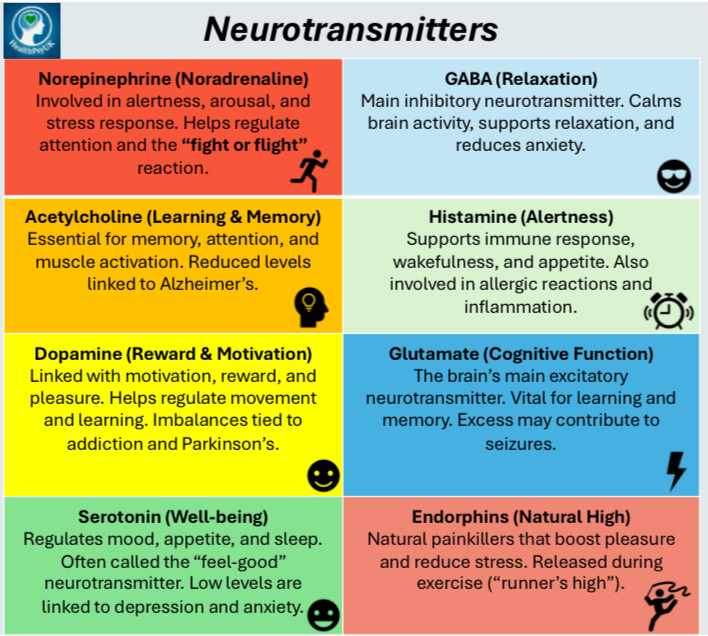
Neurotransmitters are the brain’s chemical messengers, carrying signals between neurons. Some excite activity (e.g., glutamate), while others inhibit it (e.g., GABA). Well-known neurotransmitters like dopamine, serotonin, and noradrenaline shape mood, motivation, and behaviour. Once released, neurotransmitters are quickly cleared through breakdown (enzymes destroy them) or reuptake (they are reabsorbed back into the releasing neuron). This keeps brain signalling precise. Many medications, such as antidepressants, work by altering these processes, for example, SSRIs block serotonin reuptake to improve mood.
Figure 1 Neurotransmitters
The brain speaks in chemistry, but our lives are written in choices — every healthy habit strengthens the conversation between mind and body.
Imbalances in neurotransmitter pathways are linked with conditions such as depression, anxiety, addiction, and schizophrenia. Brain imaging shows, for instance, bright regions at the front of the brain — the prefrontal cortex — which is linked to motivation, planning, and mental health conditions such as schizophrenia.
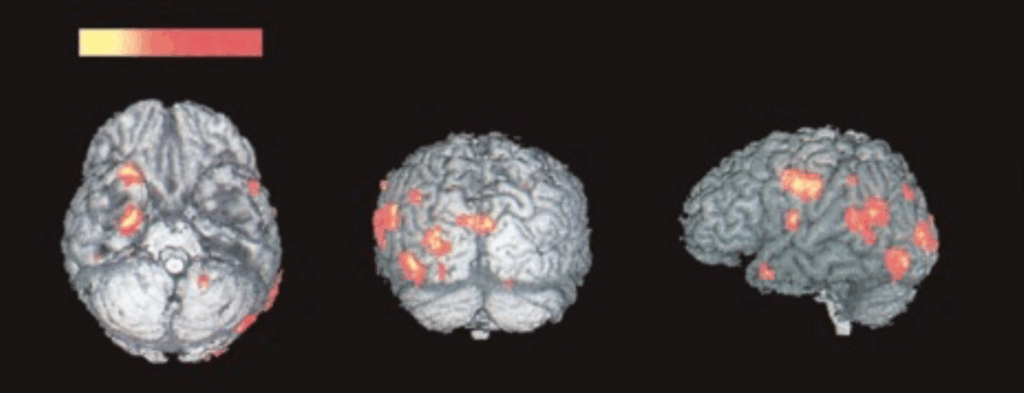
Figure 2 Positron emission tomography (PET)
Figure 2 shows a neuroimaging technique, which examines brain activity in schizophrenia patients, with active regions shown in red and yellow, where yellow indicates the highest activity.
Why It Matters for Health Psychology
Neurotransmitters influence much of how we feel and act, but health psychology focuses on turning that biology into meaningful change.
Treatment & Recovery: Medications that act on neurotransmitters (like antidepressants) can be powerful, but health psychology highlights the importance of perception and behaviour. When combined with lifestyle changes — exercise, therapy, stress management — treatments often have stronger and longer-lasting effects.
Mood & Motivation: Chemicals like serotonin and dopamine shape our energy, drive, and persistence. Health psychology explores how these biological factors interact with mindset, helping people stay motivated to follow healthy routines.
Stress & Coping: GABA and noradrenaline regulate the stress response. When these systems are out of balance, stress can damage both mental and physical health. Coping strategies such as mindfulness, relaxation, or problem-solving can help restore resilience.
Habits & Addiction: Dopamine drives the brain’s reward system, which can reinforce both healthy habits and harmful addictions. By understanding these pathways, health psychology designs strategies to reduce triggers, strengthen self-control, and encourage lasting behaviour change.
The Bigger Picture
Neurotransmitters shape how we feel and behave, but the story doesn’t end there. Our behaviours, from how we manage stress to the habits we build, also influence brain chemistry. Stress management, exercise, diet, and sleep, for example, can all influence the balance of neurotransmitters such as serotonin, dopamine, and GABA. This creates a powerful cycle: brain activity affects behaviour, and behaviour, in turn, can help to “rewire” the brain through a process known as neuroplasticity.
This is where health psychology makes its biggest contribution. It uses behaviour as a tool to help individuals change their perceptions, cope with challenges, and adopt healthier routines, thereby supporting the brain’s natural capacity for change. In doing so, it empowers individuals not only to manage mental health difficulties, but also to strengthen resilience and create lasting improvements in wellbeing.
Source
Some material in this post was adapted from: Investigating Psychology 2 – From Cognitive to Biological. The Open University (2018).
Further Reading
Taylor, S.E. (2020) Health psychology. 11th edn. New York: McGraw-Hill.


Leave a Reply